Impact
A bulk flow gave underwriters their time back.
returned to underwriters each year, automating 3+ hours of entry per negotiation
Modeled
annual contract-value leakage mitigated through automated validation
Estimated
rated it “very helpful”; 71% plan to use it in negotiations
Post-launch survey · 38 responses
- Aligned product and engineering on design priorities through reviews and advocacy
- Shipped an in-workflow enhancement from post-launch research
- Secured Excel upload on the product roadmap
Overview
Savings were typed in one facility line at a time.
Led design end to end, then post-launch research.
Shipped. 10 interviews, 38 survey responses.
2 POs, eng manager, 4 engineers. 3 months.
The problem
Negotiators were stuck doing data entry.
Underwriters negotiate contracts with hospital systems and enter savings across hundreds of facilities.
“I am spending 4 hours… It’s a drag on my day.”Business Analytics Senior Advisor
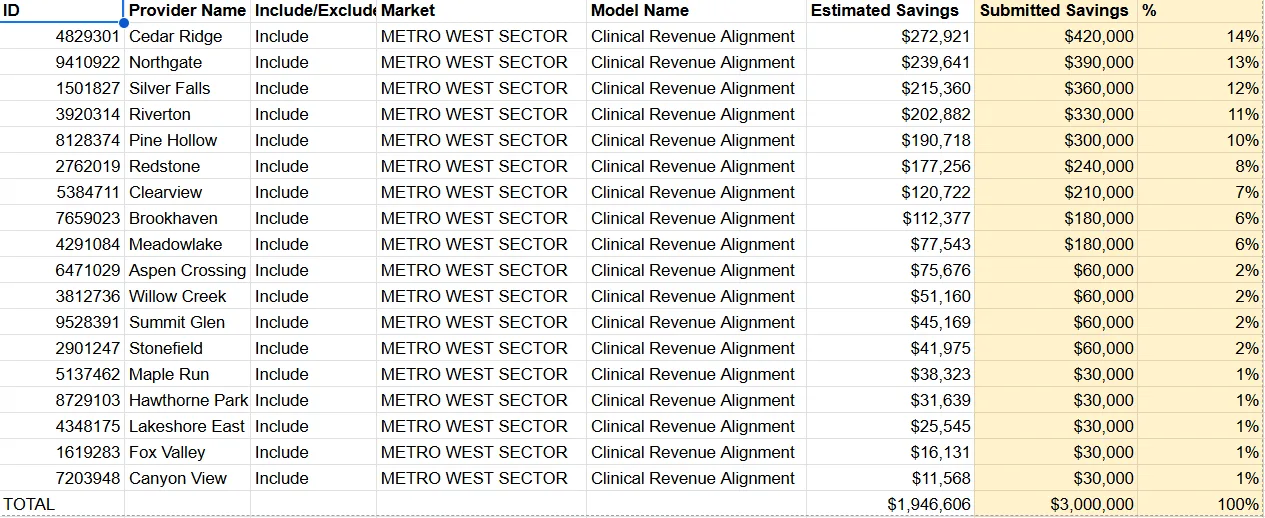
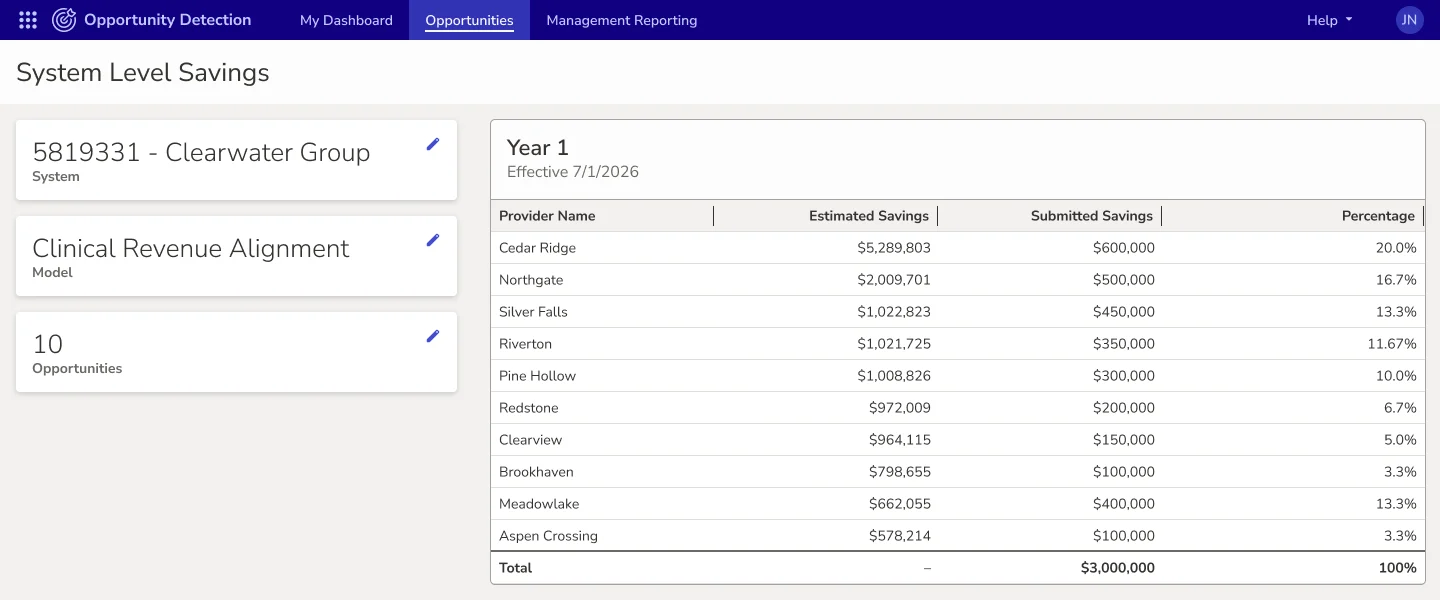
01 · Remove the work
Enter once, distribute everywhere.
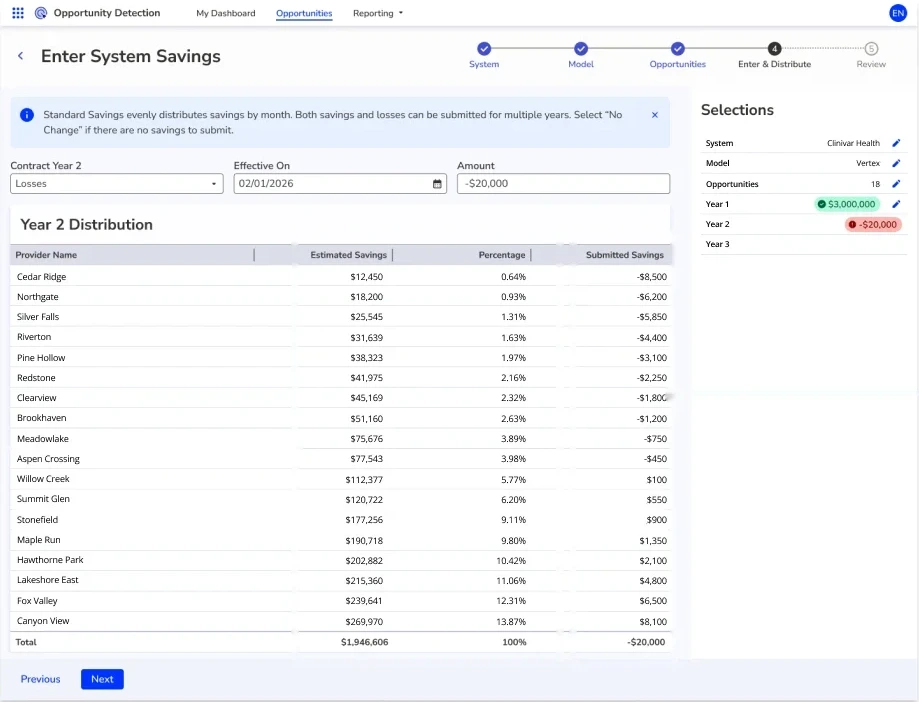
A 5-step flow that calculates savings across every line.
Faster line-by-line entry.
Not every provider is in every deal, so users pick what’s included.
More screens; a stepper shows progress.
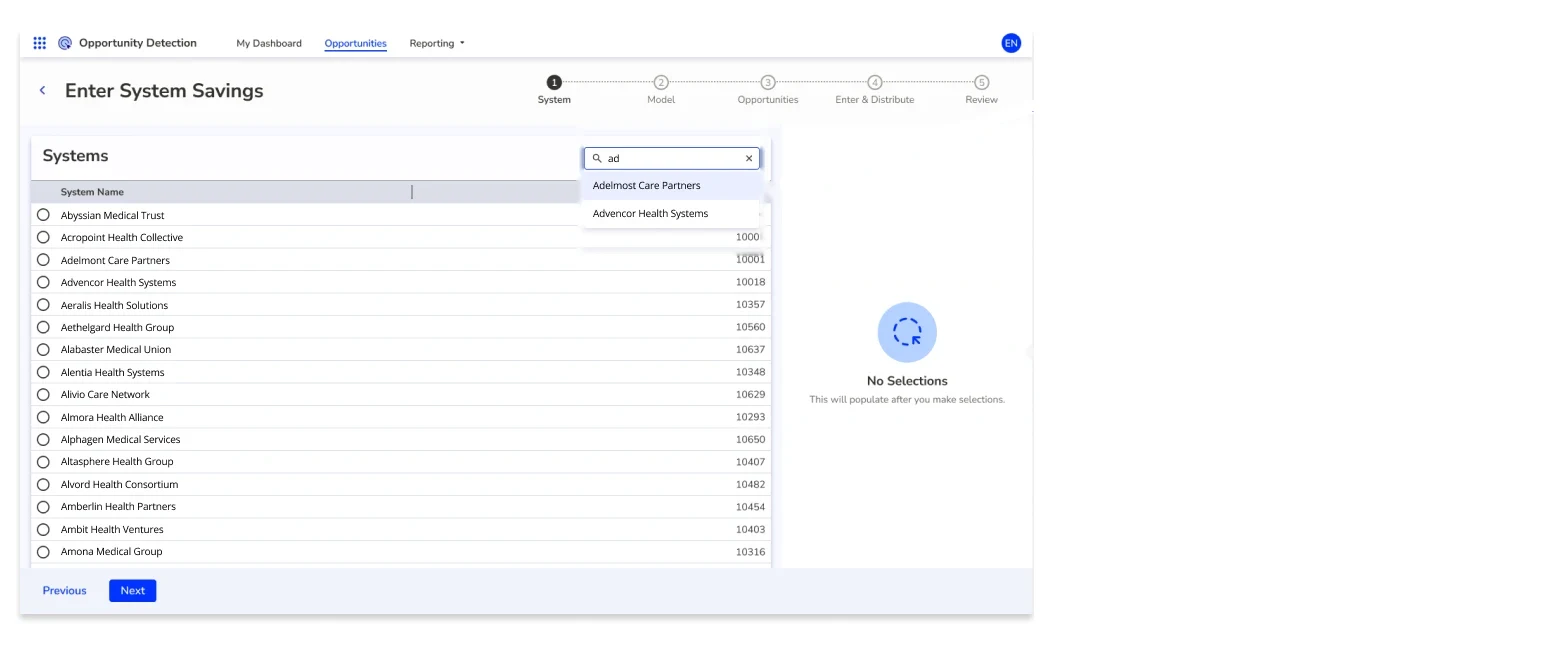 12
- Typeahead for faster results
- Empty state previews the panel
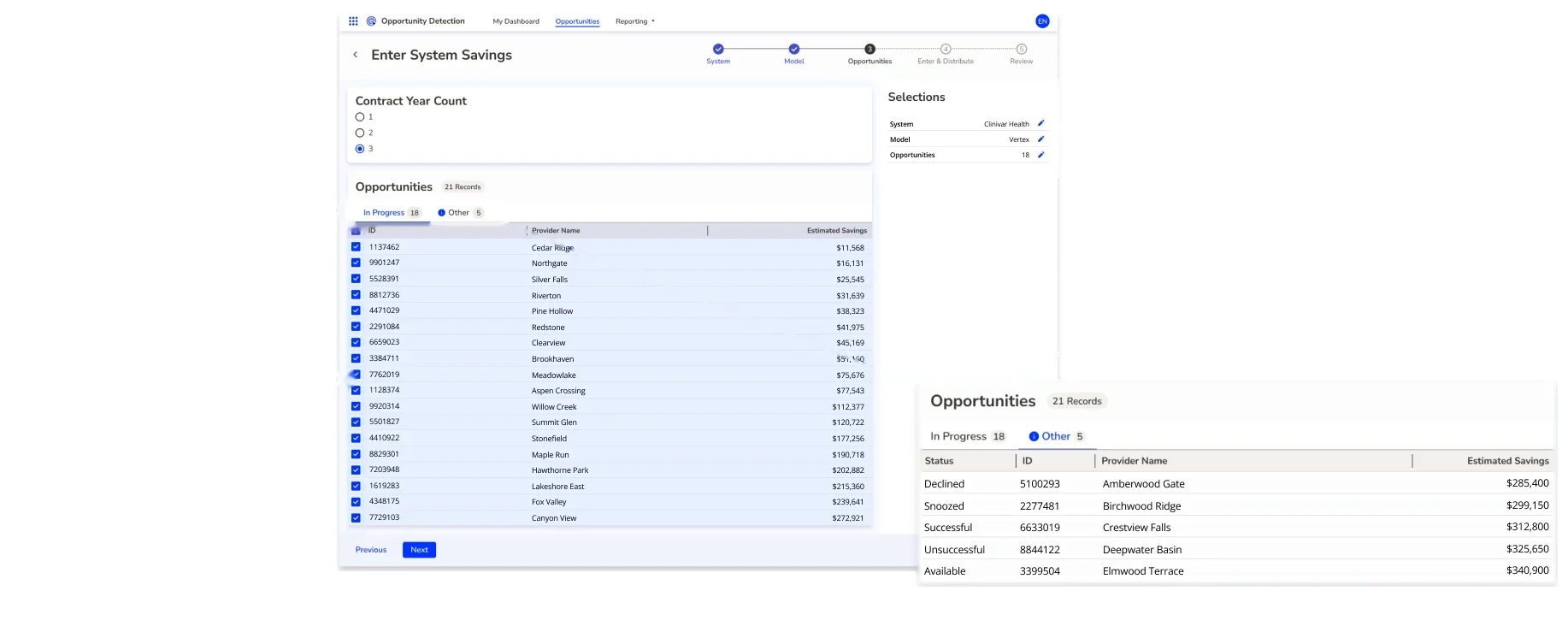 1234
- Tabs split what’s selectable
- All preselected, less clicking
- Live panel; icons mark editable
- Not selectable, but shown for context
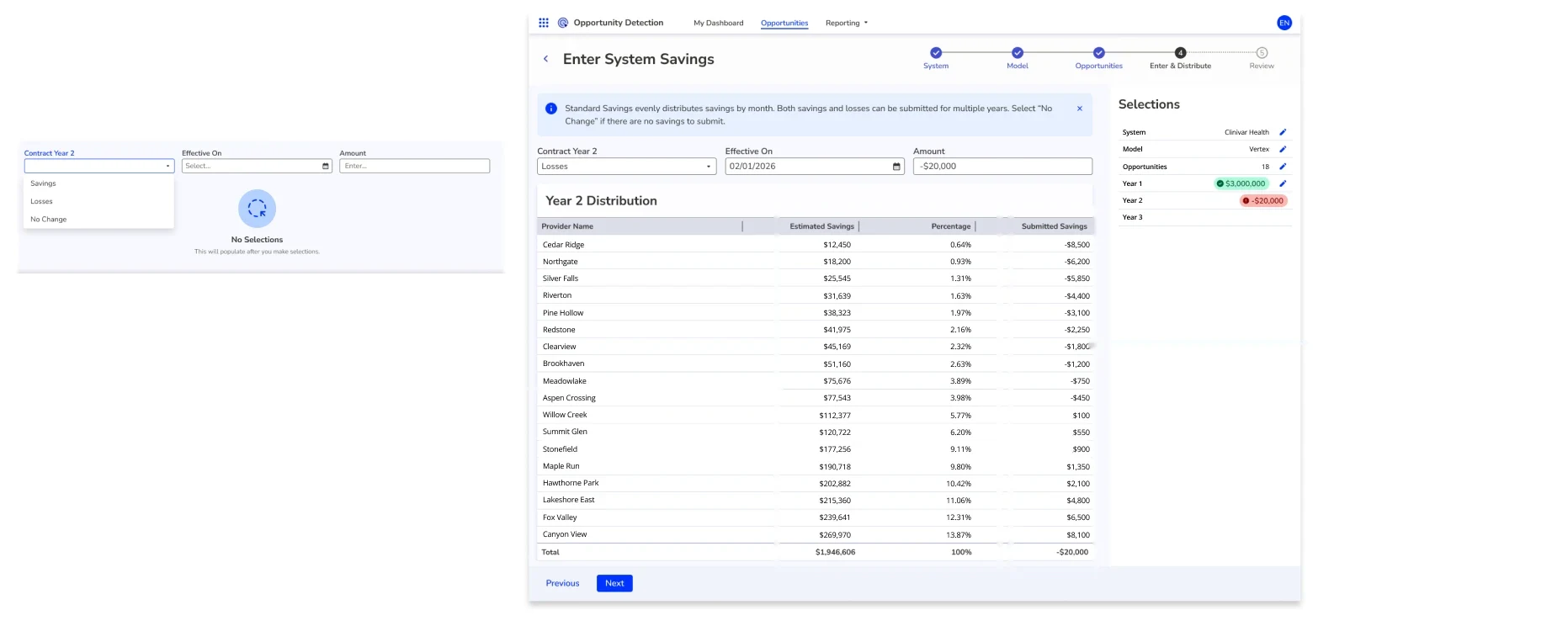 123
- Required fields start empty
- Model estimates savings and %
- Auto-filled from % and amount
02 · Reuse to ship
Edit reuses the entry screens.
Edit reuses steps 4 and 5.
A separate edit experience.
Technical limits; savings change, so editing had to ship in v1.
Users can edit values, not the system or model.
03 · Fix what research found
Keep people in the flow.
Add Available and Snoozed opportunities in the workflow.
Sending users out to change statuses.
Post-launch interviews and the survey surfaced it.
Excel upload went to the roadmap, not v1.
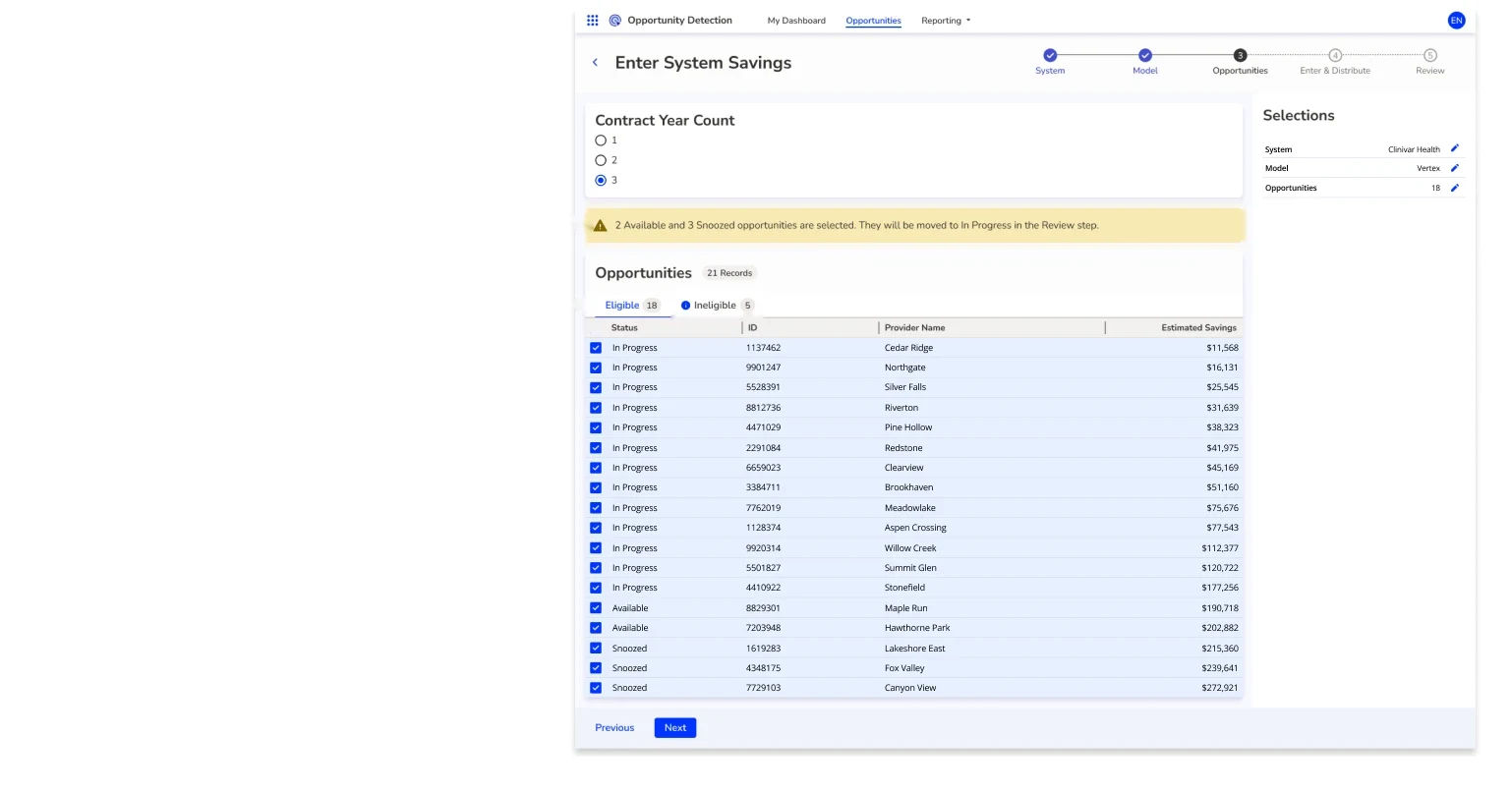 123
- Message explains status changes
- “In Progress” → “Eligible”
- “Other” → “Ineligible”
What I’d do differently
- Test with underwriters before launch. The status gap only surfaced in post-launch interviews and the survey. A round of usability testing on the stepper would have caught it before release and saved an enhancement cycle
- Push for Excel upload in v1. Users already did their math in spreadsheets. I’d scope a simple import alongside the stepper as the MVP, not leave it as a later roadmap item